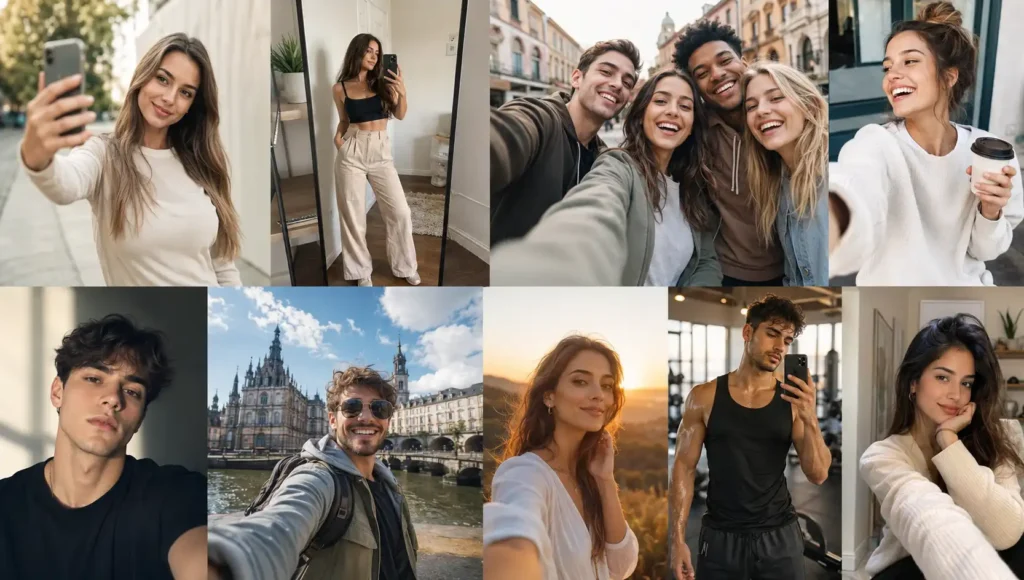
Not all selfies hit the same. Some are lowkey, some are a whole vibe, and some you post without even thinking twice. Whether you snap one every day or just on special occasions, there’s actually a name for every type of selfie you take. Here’s the full breakdown.
The Classic Face Selfie
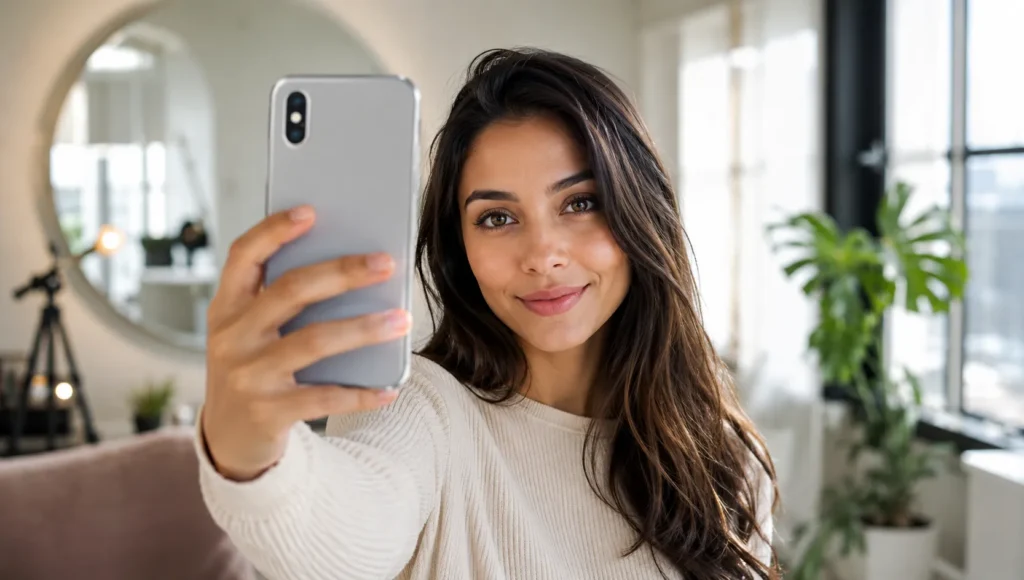
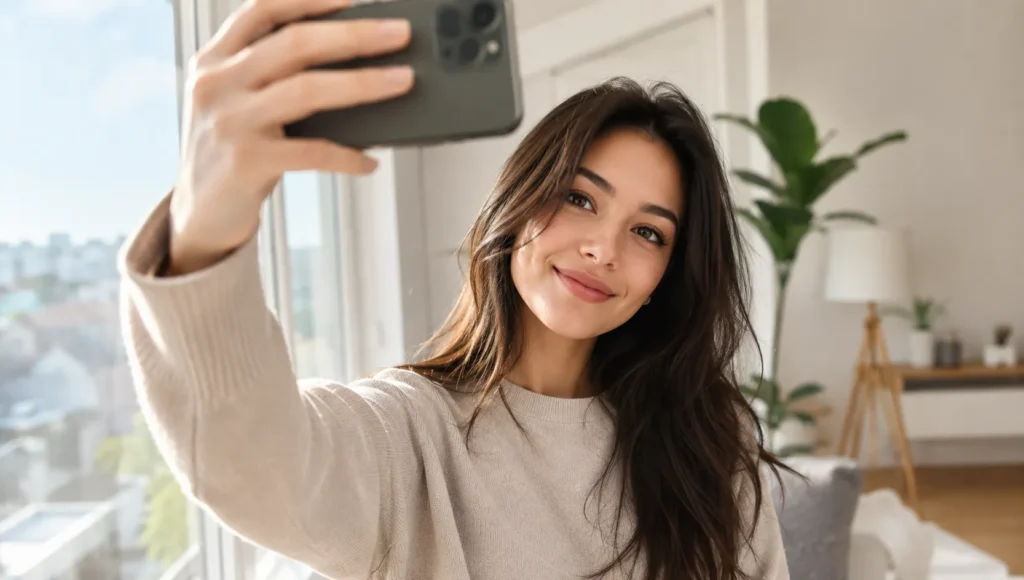
This is the one that started it all. You flip to the front camera, look straight at the lens, and snap. No setup, no tripod, no help needed. It is the most common type of selfie people take every single day.
One thing most people do not know is that the front camera shows a mirrored preview. So what you see on screen is actually flipped. That is why your face looks slightly different after you take the shot. It is not your angle. It is just how the camera works.
To get a clean classic selfie every time:
- Hold your phone slightly above eye level for a more flattering shot
- Look at the lens, not the screen
- Good lighting does more than any filter ever will
The Mirror Selfie
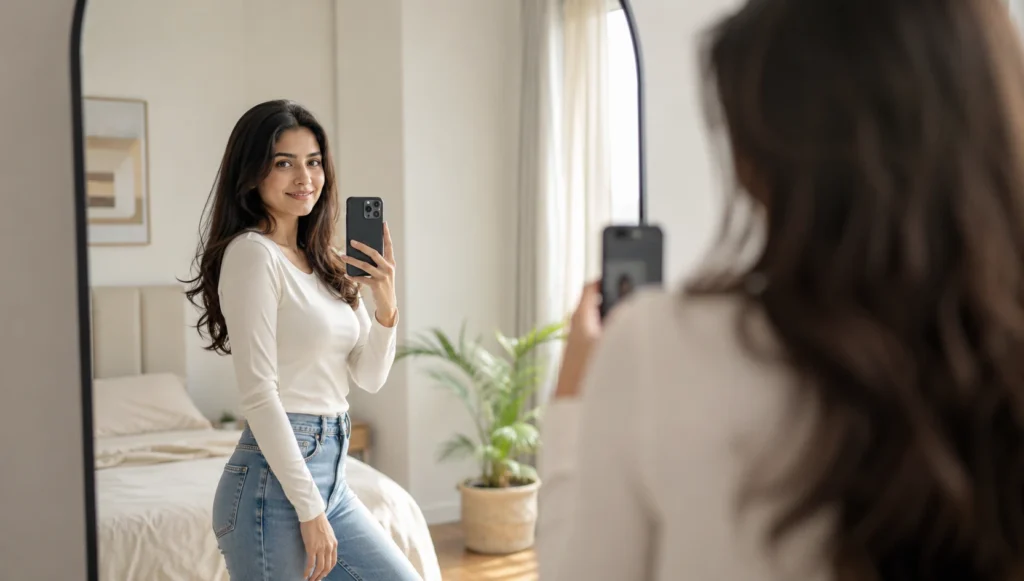
The mirror selfie is the go-to when you want the full picture. Face, outfit, vibe, and background all in one shot. That is exactly why it hits different from a regular selfie. People use it to show off a fresh fit, a gym pump, or just the aesthetic of a hotel room at 11 PM.
What makes this type unique is that the phone is visible in the frame. That is not a mistake. It is part of the look. The mirror selfie has its own style, and people know it when they see it.
A few things that actually make it work:
- Clean the mirror first. Smudges kill the vibe instantly
- Hold your phone at chest level, not eye level, for a more natural look
- Natural light from a window beats bathroom lighting every time
The Group Selfie (Squad Shot)
This one is a whole production. Someone stretches their arm out as far as it goes, everyone squeezes into the frame, and half the squad still gets cut off. It is chaotic, but that is exactly what makes it iconic.
The group selfie even has its own official name. It is called a “groufie,” a term actually trademarked by smartphone brand Huawei. The most famous one ever? Ellen DeGeneres snapping a shot with a bunch of A-listers at the 2014 Oscars. It broke Twitter and became the most retweeted photo at that time.
A couple of things that make a squad shot actually work:
- Use the wide-angle mode if your phone has it. It fits more people without the awkward stretch
- Put the tallest person in the back, not the front
- Take at least five shots because someone always blinks
The Candid Selfie
The candid selfie is the art of looking like you had no idea the photo was being taken. Laughing at nothing, looking away, mid-sip on a coffee. It feels real. That is the whole point.
Here is the thing though. Research from Wharton actually backs this up. Studies show that people who post candid-looking photos get more positive reactions. Viewers find them more genuine and feel more drawn to that person. So the “effortless” look is not just a vibe. It actually works.
The trick is making a posed shot feel unposed. A few ways people nail it:
- Look slightly away from the lens instead of straight into it
- Catch yourself mid-laugh or mid-movement
- Use burst mode and pick the most natural frame from the bunch
The No-Smile Selfie
Millennials (Gen Y) had the duck face. Gen Z has the straight face. No smile, no expression, just direct eye contact with the lens and a whole lot of unbothered energy. This look has its own name now. People call it the “Gen Z stare” or the “Gen Z pout” and it is all over TikTok and Instagram.
The shift is intentional. Smiling for the camera feels performative to a lot of people now. The no-smile selfie pushes back against that. It says “I am not here to perform for you.” Psychologists actually call it a form of emotional boundary-setting in an era where everyone is always being watched online.
The contrast with the duck face is pretty clear:
- Duck face was loud, playful, and over the top
- The no-smile selfie is quiet, cool, and low effort on purpose
- One screams “look at me.” The other just stares back.
The Travel Selfie
You just landed somewhere new. The landmark is right behind you. The phone goes up before you even take in the view. That is the travel selfie, and pretty much everyone has taken one.
This type actually has a name now. Researchers and UNESCO officially call it “selfie tourism.” Studies show that 75% of travelers pick their destination because of photos they saw on social media. So people are not just taking travel selfies to remember the trip. They are taking them because the photo was the whole point of going.
A few things worth knowing:
- The Eiffel Tower, Colosseum, and Taj Mahal are among the most snapped selfie spots on the planet
- Some cities like Portofino, Italy now fine tourists who linger too long at popular selfie spots
- Selfie sticks are banned at places like the Colosseum and Disneyland Paris
The Golden Hour Selfie
Golden hour is that short window right before sunset when the light turns warm, soft, and cinematic. It lasts about 45 to 60 minutes. Every selfie taken during this time looks better, and that is not just a vibe. There is actual science behind it.
At midday, the sun sits directly overhead and creates harsh shadows under your eyes, nose, and chin. Photographers call this the “raccoon eyes” effect. Golden hour fixes all of that. The sun sits low, so the light hits your face at a flattering angle, evens out your skin tone, and makes everything look naturally glowy. No filter needed.
A couple of things that make it even better:
- Face toward the sun for that warm glow on your cheekbones
- Do not wait until the last minute. The best light starts about 30 minutes before sunset
- Use apps like Golden Hour One or PhotoPills to find the exact time at your location
The Soft Launch Selfie
You post a photo. Everything looks normal. But if you look closely, there is a hand, a shoulder, or a shadow that is not yours. No tag. No caption explaining anything. That is a soft launch, and the internet always notices.
The soft launch selfie has its own playbook:
- A mystery hand in a photo dump, buried around slide four
- Two coffee cups, two wine glasses, two of anything
- Someone cropped out just enough to spark the question “wait, who is that?”
The Gym Selfie
The gym selfie gets a bad rap. People call it narcissistic, extra, or just plain annoying. But there is actually a legit reason people take them. A study tracking 347 adults over nine months found that people who shared weekly workout updates including photos had 37% higher gym attendance than those who only tracked privately. The selfie was basically keeping them accountable.
That said, the gym selfie has its own culture. There is the post-workout pump shot in the mirror, the progress pic, the pre-workout “I showed up” snap, and the post-run sweaty selfie. Each one sends a different message but all of them say the same thing underneath: I put in the work today.
A few unwritten rules people actually follow:
- Do not hog the mirror while others are trying to train
- The post-workout shot hits harder than the pre-workout one
- Lighting in gym bathrooms is genuinely terrible so most people just deal with it
The Indoor Selfie: When the Vibe Is Already Built In
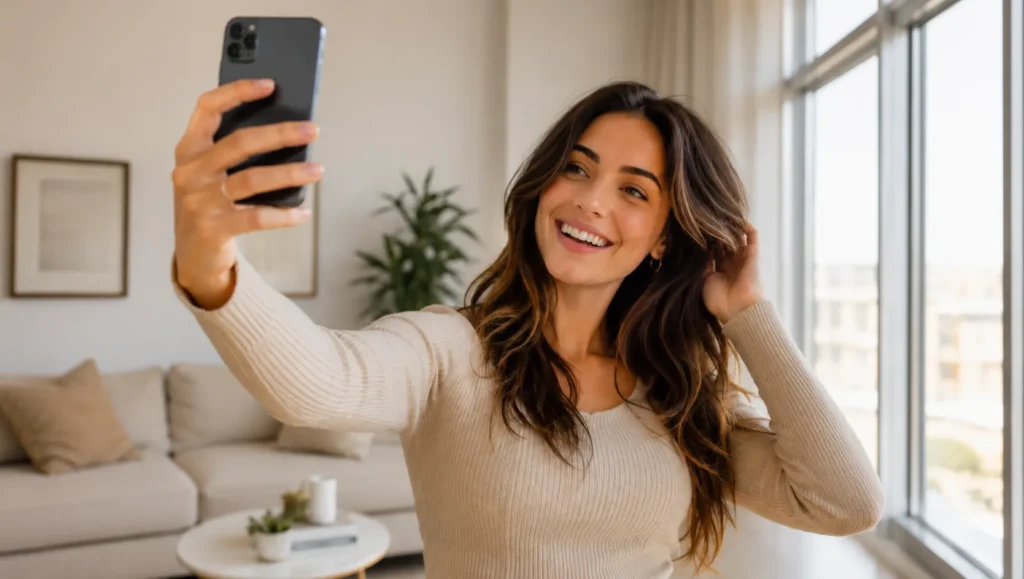
Not every great selfie happens outside. Some of the most fire shots come from indoors, where you actually control everything. The lighting for selfie, the background, the whole setup. That is exactly what makes the indoor selfie its own category.
The biggest factor indoors is lighting. Overhead lights create harsh shadows under your eyes and chin. The fix is simple. Face a window and let natural light hit your face directly. If it is nighttime, a ring light or a warm lamp placed at eye level does the same job. The goal is always soft, even light that wraps around your face instead of beaming down on it.
Background matters just as much. A clean wall, a neon sign, a cozy room corner, or even a bookshelf behind you can completely change the energy of a photo. Clutter kills the vibe instantly.
A few indoor selfie basics that actually work:
- Face your light source, never put it behind you
- Step a little away from the background to add depth to the shot
- Warm light gives a cozy feel, cool light gives a clean editorial look
Which Type of Selfie Are You?
Every type of selfie on this list says something different. A travel selfie says “I was here.” A candid selfie says “I am real.” A no-smile selfie says “I am unbothered.” A soft launch says absolutely nothing out loud but somehow says everything. The type of selfie you reach for tells more about your personality than you probably realize.
At the end of the day a selfie is just a photo you took of yourself. But the way you take it, the setting you pick, and the energy you bring to it all make it yours. So whether you are an indoor selfie person or a golden hour chaser, own it. There is a whole type on this list with your name on it.